


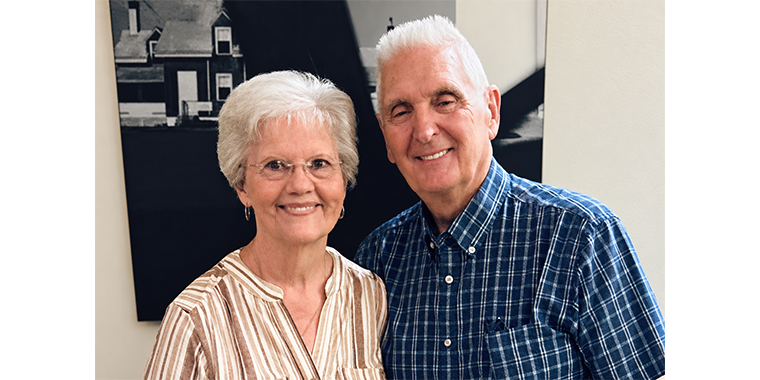
For Edward D. Glinski, DO, MBA, a 1975 graduate of Kansas City University (KCU) College of Osteopathic Medicine (COM), global health is a sacred opportunity to see medicine, humanity and the world from a different perspective.
An ophthalmologist, Glinski first entered the mission field in 1979 after being recruited by a nurse to travel to Ecuador. The experience opened his eyes to a tremendous need for health care in communities where many people struggle to access even life’s basic necessities. It also shaped his understanding of what it means to serve as a physician in another country.
“You have to understand that you’re not there to overshadow the local doctors,” Glinski says. “They know their communities. They screen patients and make referrals. I do the surgeries. We each do our part.”
That philosophy has guided Glinski throughout decades of mission work. He sees his ability to perform surgery as a gift and mission trips as an opportunity to use that gift in places where it can make a meaningful difference.
“It’s always been an important part of my life,” he says. “I feel gifted to be a surgeon, and this is an opportunity to go beyond and serve people who have needs.”
It is a lesson Glinski believes is equally valuable for the next generation of physicians.
To him, the mission field is an extension of a student’s medical education. In clinics without access to advanced diagnostic tools such as MRIs, AI or robotics, physicians must rely heavily on what they can see, hear, feel and observe.
“You have to learn how to diagnose with your five senses,” he says. “That’s becoming a lost art but is the foundation of the osteopathic tradition.”
In addition to honing their clinical skills, Glinski says that students encounter patients whose cultures, circumstances and perspectives may be very different from their own. They learn that there is no single way to understand health, illness or what it means to live a fulfilling life.
“They learn that the rest of the world is alive and well,” Glinski says. “We don’t have all the answers.”
While the communities he’s served have limited financial resources, Glinski says the patients often possess something that can be harder to find in more affluent societies: a profound sense of faith, gratitude and joy.
“Their faith will knock your socks off,” he says. “They teach us the gift of thanksgiving and praise. They have joy and happiness in their lives. They just have a very different lifestyle.”
To Glinski, that shift in perspective is one of the most valuable benefits of global health education. The work challenges students to look beyond themselves, gain a deeper appreciation for what matters most and recognize the strengths and wisdom within every community.
Wanting more students to experience the transformative power of global health outreach, Glinski and his wife, Shirley, established the Gautam J. Desai, DO, FACOFP Endowment for KCU Global Health earlier this year. Their gift reflects a belief that meaningful global health experiences require more than good intentions. They require investment.
The endowment honors Desai, a professor whose leadership has been instrumental in advancing the Global Health program at KCU. The Glinskis’ gift will help expand opportunities for selected KCU students to participate in global health experiences by providing support for travel, supplies and other program expenses.
“The fact that this program changes people's understanding of life is a big deal,” Glinski says. “It’s much bigger than just an education.”
His goal is ultimately to give future physicians the opportunity to discover what he has learned over a lifetime of mission work: that medicine can cross borders, cultures and circumstances, and that the lessons of service go both ways.
“You go there thinking you’re going to help them,” he says. “But you come back realizing they’ve taught you a lot, too.”


(0) Comments