


Students exploring dental schools in Missouri often begin with the same core question: “Which program do I choose?”
The answer isn’t immediately obvious, as there are multiple pathways to choose from with varying admissions requirements. There are also differences in program curriculum and clinical training.
This guide focuses on the Doctor of Dental Medicine (DMD) and Doctor of Dental Surgery (DDS) degree programs, explaining what dental students should expect, and offering practical advice on how to get into dental school. It also highlights how the DMD program at Kansas City University (KCU) prepares future dentists to improve the well‑being of the community they serve.
Understanding DMD vs. DDS programs
Both the Doctor of Dental Medicine and Doctor of Dental Surgery degree programs prepare students to become licensed dentists. The degrees meet the same academic standards, are both accredited by the Commission on Dental Accreditation (CODA), and lead to the same scope of practice. The difference lies in the naming convention, not in educational quality.
The best way to assess DMD and DDS programs is by learning about their curriculum structure, clinical philosophy and the type of training environment offered. The DMD program at KCU, for example, emphasizes early clinical exposure and a mission‑driven approach to serving communities with limited access to oral health care.
Ultimately, choosing a program goes beyond learning dental skills and competencies; it’s also about the context of how those talents are put to use.
Key factors to consider when comparing dental schools in Missouri
Choosing a dental program can be challenging if you don’t know which qualities are relevant to your educational experience. Consider the following elements as you begin evaluating programs.
Curriculum structure
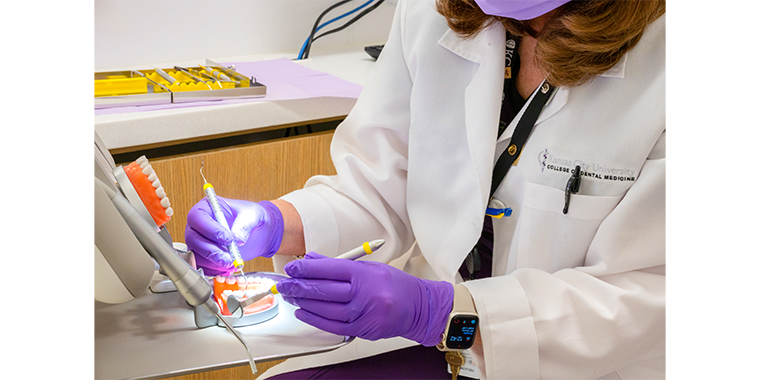
Look for programs that integrate biomedical sciences with hands‑on clinical training. The curriculum at KCU introduces clinical concepts early, reinforcing them through simulation and patient care experiences that build confidence and skill through practice.
Clinical training model
Some programs delay live patient care until later in the curriculum, which can feel like lost time to some students. The approach at KCU includes early exposure to clinical concepts, followed by progressive, real‑world experience in the KCU Oral Health Center and community educational sites across the region.
Cost and residency status
Tuition varies across dental schools in Missouri and factors such as whether the institution is public or private can influence cost. Students should review in-state and out-of-state tuition structures, financial aid options and the total cost of the program, including living expenses and equipment expenses.
Location and community needs
Practicing in a densely populated metropolitan area is quite different than working in a quiet suburban or rural area. The location and its community set the tone for who a dentist serves and the pace of the day.
The KCU College of Dental Medicine is in Joplin, Missouri, a region with significant dental workforce shortages. This environment provides meaningful opportunities to serve patients who face barriers to care and to develop skills that support community well‑being.
Admissions competitiveness
Dental schools in Missouri aren’t uniform in how they evaluate applicants. Understanding dental school requirements, including prerequisite coursework, test scores, letters of recommendation and interview expectations, will help you determine where you are most competitive.
How to get into dental school: building a strong application
There’s no shortcut to preparing a compelling application. It takes time, care and thorough planning. Here are practical steps to help you stand out.
Complete prerequisite coursework
Most dental programs require foundational science courses such as biology, chemistry, organic chemistry and physics. KCU admissions requirements also include coursework in anatomy, physiology and microbiology with a grade of C or better.
Prepare for the Dental Admission Test (DAT)
The DAT evaluates academic readiness and scientific understanding. It consists of four sections, including:
-
Survey of Natural Sciences
-
Perceptual Ability Test
-
Reading Comprehension Test
-
Quantitative Reasoning Test
The DAT is widely considered to be one of the most heavily weighed factors in a dental school application, especially when it comes to spatial visualization, 3D manipulation and science scores.
Gain exposure to the profession
Practical experience is invaluable, even if it’s in an observational capacity. Shadowing dentists or volunteering in health care settings can strengthen your understanding of patient care and help you learn the ropes.
Show evidence of service
When evaluating how to get into dental school, focusing on the “why” can be a huge differentiating factor on an application. The mission of KCU centers on improving the well‑being of the communities we serve. Applicants who demonstrate service, leadership or community involvement often align well with this philosophy.
Write a thoughtful personal statement
A well-written personal statement can help your application stand apart from your competition. It’s your opportunity to show that you’re more than your grades or your DAT score. Explain why dentistry matters to you, how your experiences shaped your goals and why you are prepared for the demands of dental school.
Prepare for interviews
Interviews assess communication skills, professionalism and readiness for patient‑centered care. You can prepare by reviewing mock interviews and familiarizing yourself with commonly asked questions, such as:
-
“What made you choose dental school?”
-
“What are your greatest strengths/weaknesses?”
-
“How do you handle stress?”
-
“What do you hope to accomplish in the field?”
Practice discussing your experiences and motivations out loud with another person. Rehearsing the Q&A portion will help you deliver more thoughtful answers when it’s time for the real thing.
What sets the KCU DMD program apart
Students comparing dental schools in Missouri often look for programs that blend a rigorous academic curriculum with meaningful clinical experience. Here’s what makes the DMD program at KCU unique.
Early and continuous clinical exposure
Students begin engaging with clinical concepts in year one, progressively building skills through simulation and supervised patient care.
Community‑focused training
Located in a region with significant oral health needs, KCU offers opportunities to serve diverse patient populations and develop skills that support community well‑being.
Integrated biomedical and clinical sciences
The curriculum connects foundational science to real‑world dentistry, helping students understand the logic and reasoning behind clinical decisions.
Supportive learning environment
Faculty, staff and clinical partners work closely with students to build confidence, competence and readiness for practice.
Mission‑driven education
KCU prepares future dentists to improve the well‑being of the communities we serve through compassionate, evidence‑based care.
Choosing the right dental school for your goals
Selecting a dental program is a personal decision that directly influences your professional future. As you compare dental schools in Missouri, consider how each program aligns with your learning style, values, budget and long‑term career goals.
For students seeking a degree track that instills the foundational knowledge and clinical patient care skills required to start a career in dentistry, KCU is currently accepting applications for our DMD program. After reviewing our dental school requirements, DAT expectations and student FAQs, connect with the admissions team to learn more about how to strengthen your application.



(0) Comments