


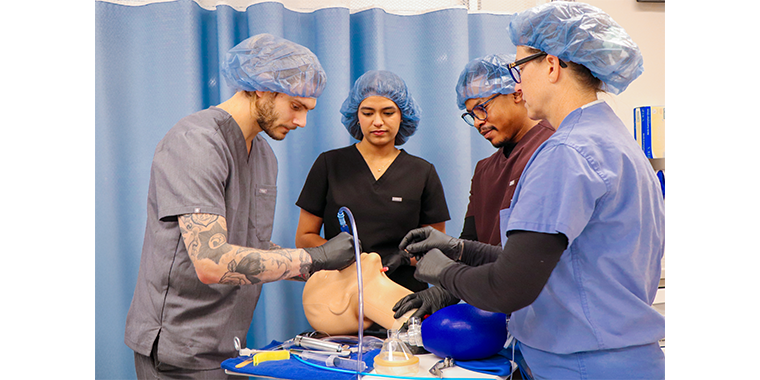
If you're exploring a career path in anesthesia, you may be considering two important roles: certified anesthesiologist assistant (C-AA) and certified registered nurse anesthetist (CRNA).
While both careers play a critical role to patient care during medical procedures, their education pathways, clinical training and scope of practice differ. Kansas City University (KCU) is committed to preparing future health leaders who embrace patient-centered care and thrive in collaborative environments. KCU offers its Master of Health Science in Anesthesiologist Assistant program on the Joplin campus, providing students with rigorous training and hands-on clinical experience
Understanding the difference between a C-AA and a CRNA can help you determine which anesthesia career best aligns with your background, interests and long-term career goals.
What is a certified anesthesia assistant?
A certified anesthesia assistant is a health care professional who works under the supervision of a board-certified anesthesiologist. C-AAs play a crucial role in delivering anesthesia safely, from pre-procedure preparations to post-operative care. They assist physician anesthesiologists by monitoring patient vitals, adjusting anesthesia levels and ensuring patients remain comfortable throughout their procedures.
C-AAs earn a Master of Health Science in Anesthesiologist Assistant and complete intensive clinical training. Coursework focuses on anatomy, pharmacology and advanced patient care techniques, preparing graduates to thrive as essential members of health care teams. C-AAs practice within a physician anesthesiologist-led model to maintain the highest standards of safety and collaboration.
What is a CRNA?
Certified Registered Nurse Anesthetists (CRNAs) are advanced practice nurses trained to administer anesthesia. CRNAs practice in a variety of settings including surgical centers, hospitals, obstetric and rural health care environments. Depending on state regulations, CRNAs may work independently or as part of an anesthesia care team.
The path to becoming a CRNA begins with a bachelor’s degree in nursing (BSN) and at least one year of critical care nursing experience. CRNAs must then complete a doctoral-level nurse anesthesia program (DNP or DNAP). Their advanced clinical education prepares them to deliver comprehensive anesthesia care, and in many settings, practice with a high degree of autonomy.
How are C-AAs and CRNAs similar?
Both certified anesthesia assistants and CRNAs:
- Administer anesthesia and monitor patients during procedures.
- Complete advanced degrees and extensive clinical training.
- Collaborate with interdisciplinary health care teams to ensure safe, effective patient care.
C-AAs vs. CRNAs
|
Aspect |
Certified Anesthesiologist Assistant (C-AA) |
Certified Registered Nurse Anesthetist (CRNA) |
|
Educational Path |
Master’s degree in anesthesiologist assistant studies |
Doctoral degree in nurse anesthesia (DNP/DNAP) |
|
Licensure |
Practices under anesthesiologist supervision |
May practice independently in many states |
|
Background |
Science or pre-med focus |
Nursing with critical care experience |
|
Scope of Practice |
Physician-led anesthesia care team model |
Full anesthesia services, often with autonomy |
Which anesthesia career is right for you?
Choosing between a C-AA or CRNA depends on your education background, professional interests and long-term goals.
If you are drawn to a science-focused pathway and prefer working with a physician-led team model, becoming a C-AA may be a strong fit. KCU offers its Master of Health Sciences in Anesthesiologist Assistant program, where students receive rigorous academic preparation and hands-on clinical training.
If you’re passionate about nursing, value autonomy and aspire to advanced clinical leadership, pursuing a CRNA pathway may better align with your goals.
Both roles offer meaningful opportunities to make an impact in patient safety and outcomes.
How to get started in anesthesia careers
Kansas City University prepares health care professionals to serve with compassion, integrity and purpose. Whether you're beginning your undergraduate journey or considering advanced professional degree, building a strong foundation in science and clinical care is the first step.
Certified anesthesiologist assistants and CRNAs each play essential roles in delivering safe anesthesia and improving patient outcomes. Understanding their similarities and differences can help you decide which path is right for you. At Kansas City University, we’re here to support you confidently choose the path that best fits your strengths and aspirations.
If you’re ready to pursue a career as a C-AA, explore the Master of Health Science in Anesthesiologist Assistant program at KCU. Discover admission requirements, clinical training opportunities and how to take the next step toward a rewarding career.


(0) Comments