


A new master’s program launching soon within the College of Biosciences will shape the next generation of health data scientists by combining cutting-edge tech with transformative clinical research experience.
In a world where data holds the key to unlocking medical breakthroughs, the upcoming master’s program in bioinformatics at Kansas City University (KCU) is designed to equip students with the knowledge and practical skills to lead in this rapidly growing field. As health care becomes more data-driven, combining biology and data science will unlock new ways to diagnose, treat and even prevent diseases.
As the demand for skilled bioinformaticians grows, the field is becoming one of the most dynamic and in-demand sectors in science and medicine. Doug Bittel, PhD, KCU professor of Biosciences, emphasizes the real-world impact of bioinformatics. “It’s about finding meaning in the numbers.”
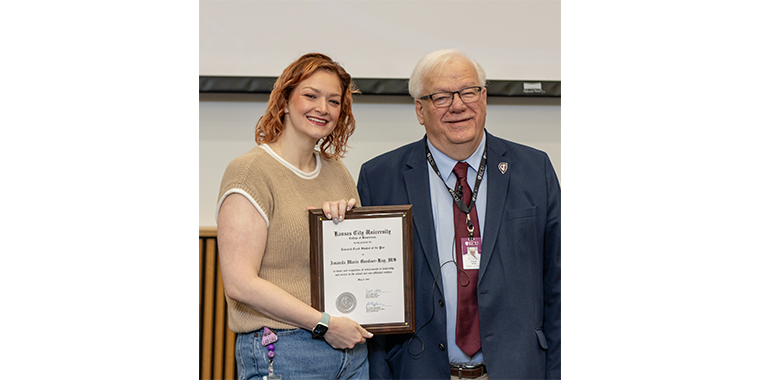
For Amanda Gardner-Kay, a 2025 graduate of KCU’s College of Biosciences (COB), bioinformatics offers a new lens through which to view medicine and research. Her career path reflects an openness to new opportunities. Originally drawn to nursing and cardiology, she soon discovered a powerful intersection between genetics and data science. “I never expected to dive so deep into bioinformatics,” she admits. “But once I realized how health data could transform disease understanding and treatment, it felt like a light bulb went off. It’s about using data to tell stories.”
Transforming data into impact
Through partnerships with leading institutions like Children’s Mercy, the bioinformatics program offers students valuable hands-on experience to tackle real health challenges. This collaboration began four years ago with a grant from the Kemper Foundation, which provided specialized equipment, software access and the computational resources necessary for the program. “Through this partnership, physician-scientists at Children’s Mercy assist in data analysis, while clinicians help students frame research questions with clinical relevance,” Bittel said.
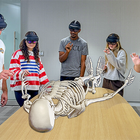
In 2021, KCU launched a bioinformatics course as a precursor to the future master’s program. Students work with cutting-edge tools like Partek and tackle genetic and clinical data. From programming to biotechnology, the curriculum combines theory with practice, preparing graduates to lead in health data research and analysis. “Bioinformatics is a game-changer in health care,” Bittel says. “The master’s program offers an in-depth, hands-on approach, where students work with complex datasets and professionals in the field.”
Robert White, PhD, program director of the COB, is thrilled to launch this program. “Bioinformatics is essential not only for those going into research but also for future physician-scientists. Whether students pursue medicine or data-focused roles, the skills they gain here will be invaluable.”
For Gardner-Kay, the program is the perfect bridge between research and clinical practice. “I want to be a physician who also does research,” she says. “Bioinformatics will allow me to understand diseases at a genetic level and create personalized treatments — this is the future of health care, and it’s what excites me most.”


(0) Comments