The KCU College of Dental Medicine (CDM) is revolutionizing dental education by providing students with cutting-edge simulation technology and advanced training equipment. With access to virtual reality (VR) simulators, customizable dental manikins, 3D scanners and printers, diagnostic imaging equipment and more inside the Dental Simulation Lab, the CDM ranks among the most technologically advanced educational institutions in the nation.
Cutting Edge Technology from Day One
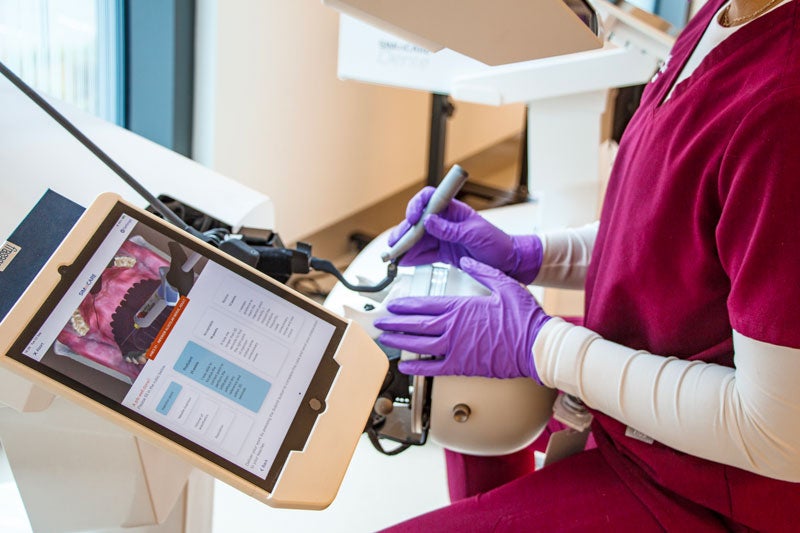
Inside the Dental Simulation Lab, students build confidence and clinical skills prior to caring for real patients. The Lab’s simulation technology includes four of the most advanced VR simulators available, allowing aspiring dentists to perform multiple repetitions, receive high-fidelity feedback and synthesize coursework into clinical practice. Using these VR simulators, our students progress from manual dexterity to restorative procedures to more complex clinical techniques under the guidance of faculty clinicians.
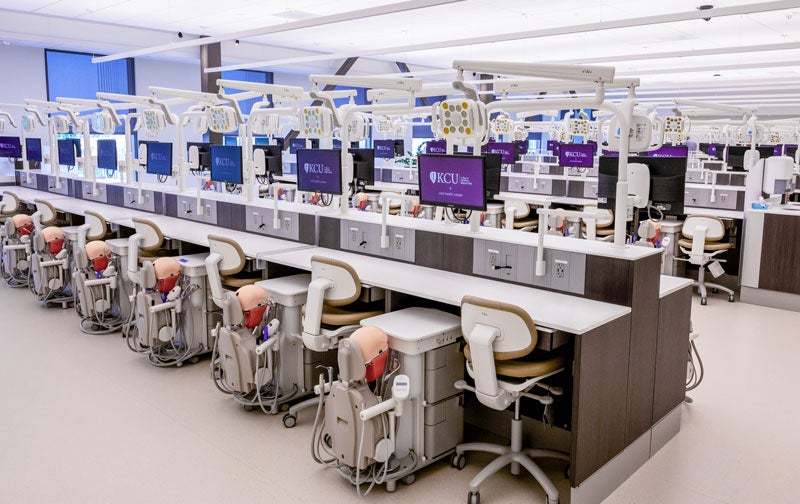
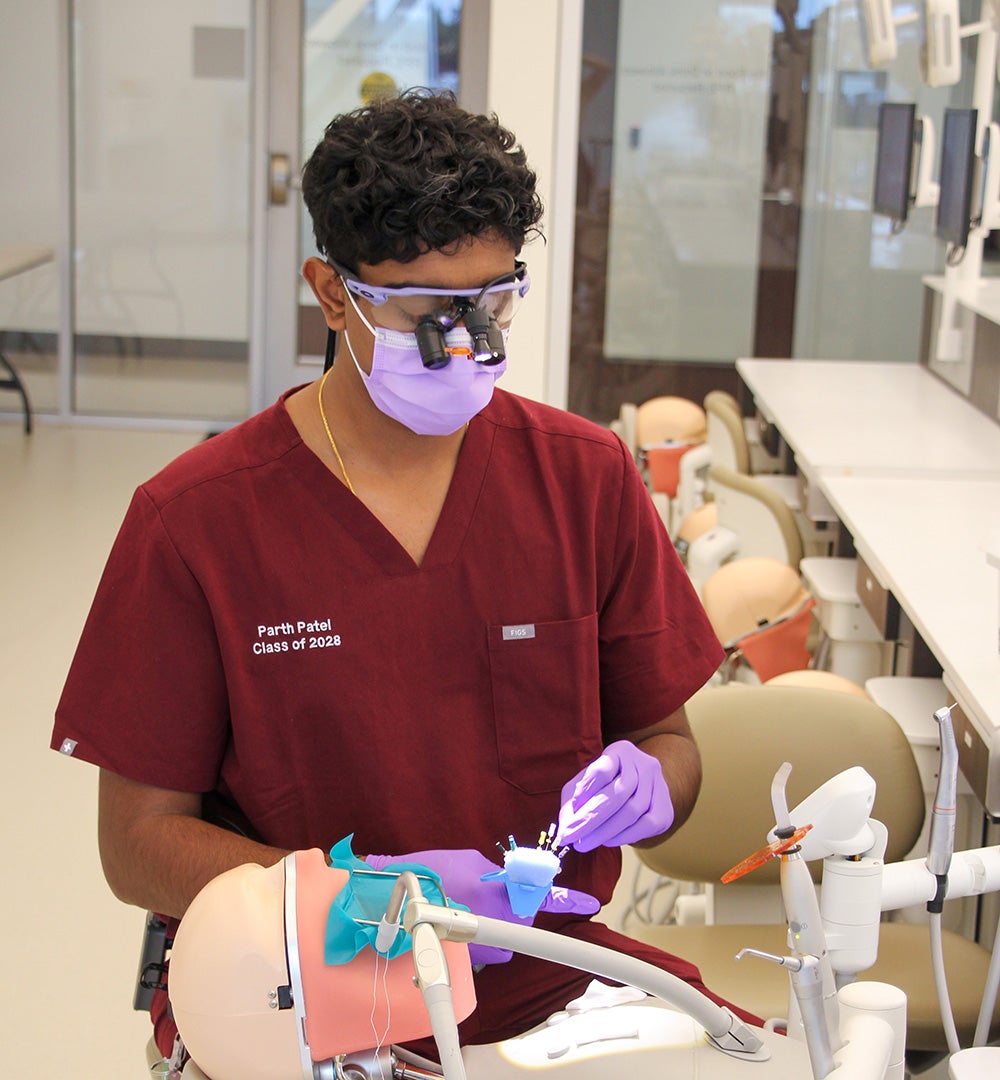
The Lab also includes a robust bay of dental manikin, or “Charlie,” heads that replicate a patient’s head and mouth. Charlie heads can be customized by equipping realistic models of teeth called typodonts that simulate clinical dental conditions such as decay, tartar and periodontal disease. Through repeat practice of dental procedures on the Charlie heads and typodonts, tomorrow’s dentists are better equipped to safely and effectively treat their future patients.
Full Picture Focus
- Intraoral digital scanners with PlanCAD design software allow students to capture comprehensive, high-resolution images of the mouth and create precise digital impressions, eliminating the need for traditional impression trays.
- Digital milling and 3D printing equipment enable students to work directly from digital impressions to design crowns, bridges and other restorations.
- The Planmeca Viso G7 CBCT/Panoramic/CEPH system provides both 2D panoramic X-rays and 3D cone beam computed tomography (CBCT) imaging, supporting detailed visualization for diagnosis and treatment planning.
Read more about the technology available inside the Dental Simulation Lab in the KCU Magazine feature, “Training with Charlie.”
Simulated Patients. Actual Impact.
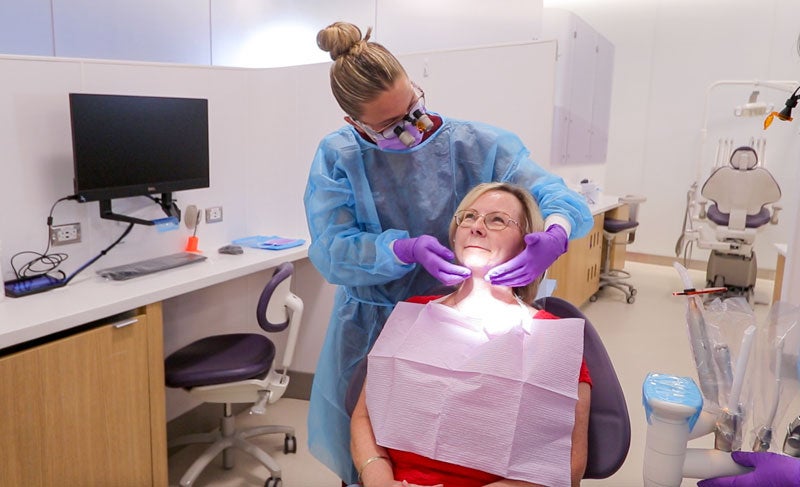
In addition to training with simulation equipment, our dental student doctors also participate in simulated patient encounters. These encounters pair future dentists with patient-actors to aid students in refining communication and interpersonal skills, increasing confidence and better understanding the patient experience.
While simulation training using manikins, VR technology and imaging equipment occurs within the Dental Simulation Lab, simulated patient encounters occur within the KCU Oral Health Center. By first learning from simulated patients in a functional clinic environment, our students are more prepared to begin providing services to real patients in both the Oral Health Center and at clinical partner sites toward the end of their first year of study.