


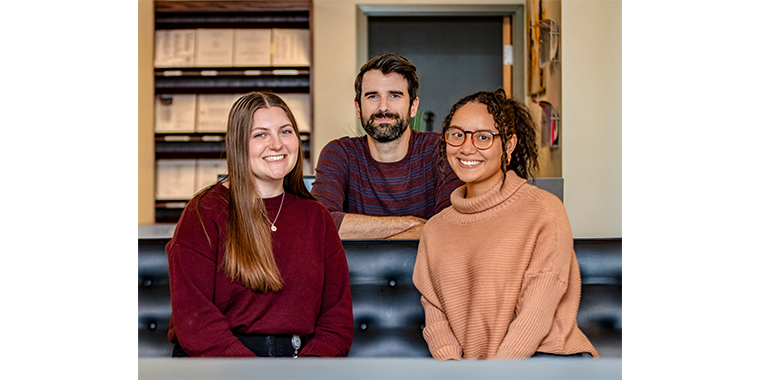
In fall 2024, Tyler Staples, PsyD (COB 2023), KCU assistant professor and clinical psychologist, took on a dual role that blends teaching with hands-on clinical work within one of Kansas City’s most impactful health services for the unhoused. He immediately saw an opportunity to offer KCU clinical psychology students a unique opportunity to learn in a real-world setting while making a very real impact in the lives of people experiencing homelessness and trauma. For Staples, it’s about human connection and understanding the struggles people face every day, bringing clinical care with the compassion needed to understand and heal the whole person.
Personal and professional
After completing his doctorate of clinical psychology at KCU, Staples chose to blend his expertise in neurodevelopmental assessment with his passion for community health. “I could have easily gone into private practice or stayed in a traditional academic role, but I felt called to work in a space where I could make a real, immediate impact,” he said. He was drawn to Care Beyond the Boulevard (CBB) for its low-barrier, comprehensive care model, which includes everything ranging from medical and dental care to post-procedure social services and rehabilitation.
An integrated approach
Through CBB, an organization dedicated to providing housing support, health care and social services in the Kansas City metro area, Staples not only provides direct care, but also mentors PsyD students at KCU. The interdisciplinary model allows psychology and medical students to collaborate, sharing knowledge and learning from each other. “They explain medical assessments, and we teach them about mental health. It’s creating a more comprehensive approach to patient care,” said clinical psychology student Rocheley Negron. Staples believes this interdisciplinary model is essential for preparing students to tackle the complex challenges of modern mental health care.
Hands-on hope
CBB serves a vulnerable population, many of whom face trauma, medical issues and mental health challenges. Staples recognizes the link between economic hardship and mental health. "When there’s no stable income or housing, mental health takes a massive hit. Trauma is a constant in this environment –it’s the rule, not the exception," he said.
This experiential learning environment doesn’t just benefit patients – it also shapes the next generation of mental health professionals. Students like Maddie McCormick are already feeling the impact. “It’s not just about diagnosing; it’s offering hope in a place where it’s hard to find,” she said.
Innovating to improve access
One of Staples' primary goals is to ensure that his students not only develop strong clinical skills but also play an active role in the long-term strategic planning of street medicine. By gathering data from patient interactions, students play a key role in shaping the future of mental health services for those experiencing homelessness in Kansas City while also helping to reduce the time needed to provide care for this at-risk community. A key project involves adapting psychological assessments for the students to better address trauma, housing instability and employment challenges.
“We saw a significant opportunity to improve student support through increasing access to testing; bringing Dr. Staples on board was the perfect solution,” said Sarah Getch, PhD, program director of Health Service Psychology at KCU. “This service will reduce wait times and provide immediate learning opportunities to students while also helping the vulnerable in our community.”
A Future of equitable care
As the PsyD program at KCU grows, Staples’ vision for integrated care will remain central to the University’s commitment to heath equity. “It’s about understanding the root causes of people’s challenges and offering support that addresses the whole person,” he said.
As health care evolves, the responsibility to advocate for systems that prioritize not just symptoms, but the full humanity of individuals falls to leaders like Staples and the next generation of health care providers.
Students like McCormick and Negron are already gaining invaluable skills — learning not only how to assess, but how to offer compassionate care to diverse populations.
_20240917190553_0.png?w=140&h=140)

(0) Comments