


Osteopathic medicine is a distinct approach to care that focuses on the body as an interconnected system. Understanding how it differs from allopathic medicine helps clarify its growing role in today’s health care system. Whether you’re considering a career as a Doctor of Osteopathic Medicine (DO) or simply want to better understand this philosophy, this overview offers a clear look at osteopathic medicine’s whole-person approach.
The origins of osteopathic medicine
Osteopathic medicine traces its roots to 1874 when Andrew Taylor Still, DO, introduced a new model of medical care. Seeking a better way to address illness, Still emphasized the body’s natural ability to heal itself and the importance of understanding how structure and function work together.
These principals remain central to osteopathic medicine today. Rather than treating isolated symptoms, DOs consider the full context of a patient’s health, including how different body systems interact and how factors such as lifestyle, stress and environment may influence well-being.
This philosophy places a strong emphasis on prevention, patient education and addressing underlying causes of illness. By viewing patients as whole individuals, Doctors of Osteopathic Medicine aim to deliver care that is both comprehensive and personalized.
DO vs. MD: What’s the difference?
One of the most common questions about osteopathic medicine is how it compares to allopathic medicine—the model practiced by Doctors of Medicine (MDs). Both DOs and MDs are fully licensed physicians who complete rigorous medical school education, residency training and board certifications. They diagnose illness, prescribe medication and perform surgeries.
The primary differences lie in their training emphasis and philosophy. Osteopathic education places a strong focus on preventive, whole-person care, while MD training has traditionally emphasized disease-focused treatment. In addition, DOs receive training in osteopathic manipulative treatment (OMT), a hands-on technique that may be used in clinical practice.
Both DOs and MDs provide comprehensive, high-quality care in all medical specialties. The osteopathic approach may resonate with patients who value an emphasis on understanding the whole person alongside clinical diagnosis and treatment.
What does osteopathic manipulative treatment involve?
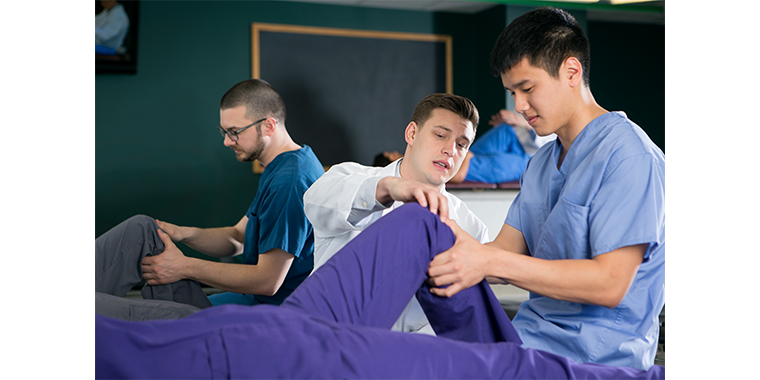
OMT uses techniques such as stretching, resistance and gentle pressure to support the body’s structure and function and complement other medical treatments.
OMT may help:
-
Reduce certain types of pain while limiting reliance on medication
-
Improve joint mobility and ease muscle tension
-
Support overall bodily function, which may benefit conditions such as headaches, respiratory concerns or digestive issues
For example, a patient experiencing back pain may receive osteopathic manipulative treatment along with other recommended treatments to help improve movement, relieve tension and address contributing factors. Rather than focusing on symptoms alone, this care considers how the body’s systems work together to support recovery.
The versatility of OMT allows it to be incorporated in many medical specialties, from primary care to sports medicine. While not every DO uses OMT in daily practice, all receive training that strengthens their understanding of the relationship between structure, function and overall health.
Why choose osteopathic medicine?
If you’re exploring a career in medicine, you may wonder what draws students to osteopathic medicine. For many, it’s the combination of rigorous medical training and a commitment to whole-person care.
Key reasons students choose to become a DO include:
- Patient-centered focus
DOs are trained to consider physical, emotional and social factors that influence health. This perspective supports stronger physician–patient relationships and more personalized care.
- Comprehensive medical training
Doctors of Osteopathic Medicine complete the same foundational medical education as MDs, including medical school, residency training and board certification. They practice in all medical specialties and are prepared to care for patients in both routine and complex clinical settings.
- Additional hands-on skills
DOs receive training in osteopathic manipulative treatment, expanding how physicians assess and address certain conditions.
- Emphasis on prevention and wellness
Osteopathic training prioritizes preventive care and long-term health, helping patients manage conditions proactively rather than reactively.
KCU has been a leader in osteopathic medical education for more than a century. As one of the nation’s original osteopathic medical schools, KCU prepares future physicians with the clinical expertise, compassion and adaptability needed to meet today’s evolving health care needs.
Osteopathic medicine in practice: Real-world impact
The whole-person approach is central to osteopathic medicine and can be especially effective when addressing complex or ongoing health concerns. By considering how physical, emotional and lifestyle factors intersect, DOs are trained to develop care plans that are both individualized and practical.
Consider the following examples:
-
A patient with recurring headaches may receive hands-on treatment to reduce muscle tension, along with guidance on posture, stress management and daily habits.
-
An athlete recovering from a knee injury may benefit from care focused on alignment, mobility and overall movement.
-
A senior experiencing chronic fatigue may work with a DO to identify contributing factors such as nutrition, activity level and sleep quality.
These examples illustrate how osteopathic medicine emphasizes understanding the full context of a patient’s health rather than treating symptoms in isolation.
The future of osteopathic medicine
As health care continues to evolve, there is growing emphasis on prevention, coordination of care and patient-centered treatment. Osteopathic medicine aligns naturally with these priorities by combining rigorous medical training with a perspective that considers the whole person.
DOs are represented throughout all areas of medicine, from primary care and specialty practice to academic medicine, research and leadership roles. Their training equips them to adapt to changing health care needs while maintaining a strong focus on quality, safety and patient experience.
For students considering a career in medicine, osteopathic medical education offers a pathway grounded in science, clinical excellence and human-centered care. For patients, it reflects a model of care that values understanding, collaboration and long-term well-being.
KCU stands out as a premier institution for osteopathic medical education. With campuses in Kansas City and Joplin, Missouri, KCU offers:
-
State-of-the-art facilities
Advanced simulation centers and hands-on learning environments that prepare students for real-world medical practice
-
A supportive learning community
Dedicated faculty and a collaborative culture that emphasize mentorship, compassion and whole-person care
-
Strong outcomes
A 99 percent placement rate over the last five years
Osteopathic medicine represents a philosophy of care that recognizes the connection between body, mind and environment. By combining rigorous scientific training with a whole-person perspective, a Doctor of Osteopathic Medicine is prepared to diagnose, treat and guide patients toward long-term health.
As health care continues shifting toward prevention, collaboration and patient experience, the osteopathic approach to whole-person care is increasingly relevant. Whether you are exploring a career in medicine or seeking care that looks beyond symptoms alone, osteopathic medicine provides a model built on understanding the person, not just the condition.
At KCU, students gain the clinical skills, compassion and adaptability needed to thrive in modern health care. If you’re interested in becoming a physician who treats the whole patient, becoming a DO at KCU may be the path for you.

(0) Comments